


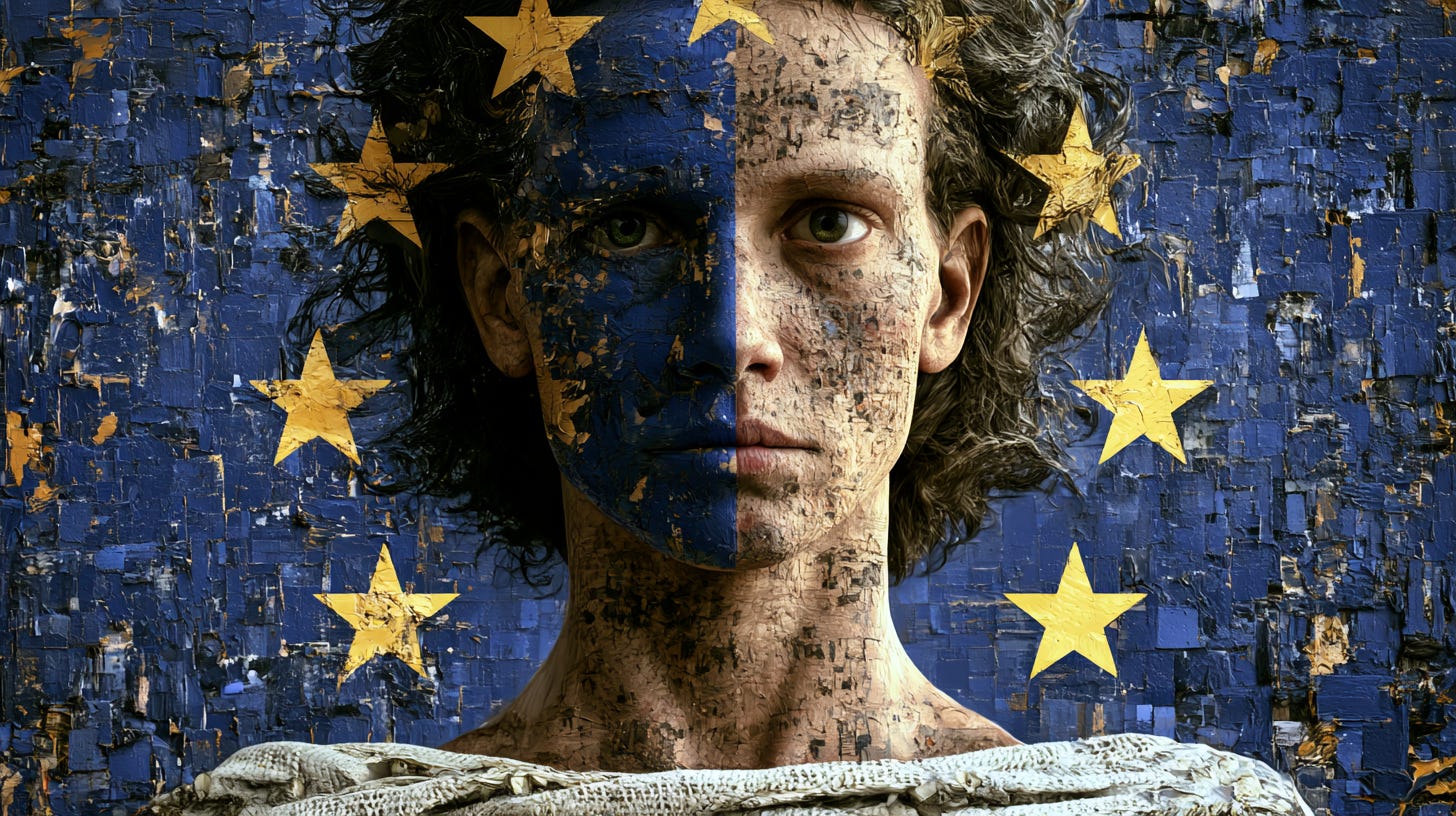
Should you label something if AI helped make it? That’s the exact question landing in my inbox, and in a few client calls, since Article 50 of the EU AI Act became binding on 2 August 2026.
Here’s why it’s not a small question. Every major AI lab is moving the same direction at once. Anthropic started watermarking everything Claude writes right after Article 50 took effect. Google’s been doing it since 2023. Meta, Microsoft and OpenAI signed the same EU code back in July. One regulation, working through the entire AI supply chain, model providers on one end, marketing teams on the other.
So let’s get into it properly. What actually needs a label under Article 50, what doesn’t, and how marketers and agencies should be handling this in practice.
TL;DR
Article 50 became binding on 2 August 2026. The bigger high-risk deadlines got pushed to December 2027 and August 2028. Article 50 did not move.
Every major AI lab is converging on the same behaviour at once. Anthropic started watermarking Claude’s text and files this month, following Google, and alongside Meta, Microsoft and OpenAI as Code of Practice signatories. This is regulation working, not a coincidence.
Two of Article 50’s four obligations sit with AI companies (chatbot disclosure, machine-readable marking). Two sit with you, the marketer or agency, as “deployer” (labelling deepfakes, disclosing emotion-recognition use).
“Deepfake” under the Act is broader than a celebrity face-swap. A realistic AI product shot or a synthetic spokesperson can count, even without a real person being impersonated.
Fines run up to 15 million euros or 3% of global annual turnover, whichever is higher.
Two voluntary industry frameworks, WFA/ICAS and IAB, landed in almost the same place: label what could mislead, skip what’s decorative.
None of the above should be your actual reason to disclose AI use. I get into why at the end.
Definitions in Article 50 - what do “deepfake,” “provider” and “deployer” mean?
Provider builds and puts the AI system on the market. Google, OpenAI, Anthropic, Meta, ElevenLabs, Midjourney. If you’re generating an image inside ChatGPT or Firefly, they’re the provider, not you.
Deployer uses the AI system under their own authority in a professional context. That’s you. The brand. The agency. Most of Article 50’s actual labelling work for marketing content lands on the deployer, which surprises people who assumed “AI company problem” meant “not my problem.”
One wrinkle worth knowing. Use someone else’s high-risk AI tool, then rebrand it, heavily modify it, or repurpose it for something new, and you stop being a deployer. You become a provider, full rulebook included. Say you take a third-party hiring-screening tool and launch it to clients under your own name, that’s enough to flip you.
Deepfake, under Article 3(60), is AI-generated or manipulated image, audio or video that resembles a real or plausible person, object, place or event, and would look authentic to a reasonable viewer. Three things have to be true: it resembles something, that something is real or could plausibly be real (a fictional but photorealistic person counts, a real celebrity is not required), and it would pass as authentic.
What that catches, per the European Commission’s guidance published 20 July 2026: an AI product shot that misrepresents how the product looks, an AI depiction of a celebrity in an ad, a synthetic influencer shown using a real sponsored product.
What it doesn’t catch, same guidance: mice arguing about cheese in human language, a real product shot against an AI background that doesn’t mislead about the product, obviously cartoonish content.
One example: Take a fully synthetic voice reading a customer testimonial, it sounds completely real. Label it clearly as AI-narrated, and you’re fine under the Act. Don’t label it, and it becomes a deepfake, even though the audio itself hasn’t changed at all. The only thing that moved was whether the audience was told the truth. That’s the actual test: not what technology made it, but whether people would believe they’re hearing something real.
What’s the timeline, and what changed this year?
The AI Act entered into force 1 August 2024. Prohibitions on manipulative AI and the general AI literacy requirement went live 2 February 2025. Rules for foundation-model companies like OpenAI and Google kicked in 2 August 2025.
Then, in mid-2026, the EU passed the Digital Omnibus, a simplification package that pushed the high-risk system deadlines back: 2 December 2027 for most high-risk use cases, 2 August 2028 for embedded product AI. If you saw a headline this year saying “EU delays AI Act,” that’s the part it meant.
Article 50 wasn’t part of that delay. It applied from 2 August 2026 as planned, with one grace period: providers of systems already on the market get until 2 December 2026 for machine-readable marking. New systems, no grace period, which is exactly why Anthropic’s watermarking rollout lined up with the 2 August date.
I think plenty of marketing teams read the delay headlines this summer and assumed the whole Act got pushed back a year. Probably not a huge risk yet, nobody’s been fined under Article 50 as of this writing. But “nobody’s been fined yet” and “not required” are different sentences, and I’d rather clients hear that from me than from a regulator.
Article 50, in plain terms
50(1), chatbot disclosure. If your AI talks directly to a person, that person needs to know it’s AI, unless it’s obvious. Provider’s job to build in, but if you’re running a third-party chatbot, check the disclosure is actually switched on.
50(2), machine-readable marking. AI providers have to embed detectable marks in generated images, audio, video and text, this is what Claude’s new watermark and Google’s SynthID are both doing. Provider obligation, not yours.
50(3), emotion-recognition disclosure. Reading emotional state or categorising people biometrically? Tell exposed people. Check this against Article 5 first though, a lot of emotion-recognition use in workplaces and education is banned outright.
50(4), the one that matters most for marketers day job. Generate or manipulate a deepfake, disclose it visibly. Publish AI text on a matter of public interest, same thing, unless a human actually reviewed it and someone holds editorial responsibility.
That carve-out gets stretched thin already. A junior account exec skimming AI copy for typos is not “editorial review.” The bar is someone with real judgement substantively examining the content, someone who could be held responsible if it’s wrong. Spell-check doesn’t count.
Do and Don’ts for marketers
Do:
Label synthetic humans, cloned voices, and manipulated video a viewer could mistake for real, especially when AI plays a central role.
Add a visible, first-exposure label for anything meeting the deepfake definition. A machine-readable mark from your vendor doesn’t cover this. You still need a human-facing label.
Build a real review step for AI public-interest text.
Check your chatbot actually shows its AI disclosure. Don’t assume the vendor switched it on.
Don’t:
Assume a real product against an AI background is automatically exempt. Usually it is, but only if it doesn’t mislead about the product. Add a performance claim and the answer can flip.
Treat a correct AI label as a shield against misleading-advertising law. It isn’t. The Unfair Commercial Practices Directive runs in parallel, alongside this.
Assume “we’re not in the EU” gets you out. If the ad reaches EU audiences, the reach probably still catches you.
Genuinely grey: where “public interest” text starts for ordinary marketing copy. The Commission leans on subject matter (health, safety, environment) rather than a clean list. I don’t think there’s a tidy answer yet. I’d rather over-label a borderline case than under-label it.
What marketing agencies need to do
Do:
Work out, project by project, who’s the deployer. It’s whoever decides whether and how AI gets used. If that’s your creative call, that’s you, not the client, regardless of whose name is on the invoice.
Write that decision into the contract itself, don’t leave it assumed. It’s the single point that causes the most confusion, more than almost anything else we’ve run into this year.
Ask your AI vendors, in writing, what marking technology they use and whether they signed the EU’s Code of Practice. Google, OpenAI, Microsoft and Anthropic are among the signatories. Some widely used creative tools haven’t signed and don’t ship visible watermarking by default. Check your own stack.
Run Article 4 AI literacy training. It’s been mandatory since February 2025, separate from Article 50, and covers every AI use.
Get ahead of your clients. Most brand teams haven’t read the Commission’s guidance. Yours has now, or will shortly.
Don’t:
Assume the client automatically bears deployer responsibility just because it’s their campaign. Decision-making control is what matters.
Let “someone glanced at it before it went live” count as editorial review. It has to be substantive, by someone with real judgement, who could be named responsible.
Wait for the client to ask. By then you’re explaining a gap, not offering expertise.
Genuinely grey: how deployer status splits when a freelancer generates content inside your workflow on their own tool licence. The Act treats people under a legal person’s control as part of that legal person, but “under control” gets fuzzy fast with freelance talent on personal subscriptions. I’d build the contract language conservatively rather than find out in a dispute.
Two industry frameworks landed in the same window
WFA and ICAS, published 2 April 2026. Their actual recommendation: sort AI use into the five categories, people and likeness, product images, audio, background visuals, marketing copy, and judge each one by whether it’s central to what someone would believe about the product. A synthetic presenter doing the selling gets labelled. An AI-touched-up background doesn’t need to be. And separately from any of that, they’re explicit that using AI to exaggerate results or fake a celebrity endorsement is off limits regardless of whether you disclose it.
IAB’s AI Transparency and Disclosure Framework, launched January 2026, updated in August. Same underlying logic, disclose when AI use is “material,” meaning it could change what someone believes is real. Their concrete list: label synthetic humans, digital twins placed in situations that never happened, AI voices saying things that were never said, and AI chatbots pretending to be people. Skip the label for routine production work and obviously stylized content. Where they go further than WFA/ICAS is recommending brands build actual machine-readable metadata into the content itself, the same kind of provenance tech behind the Google and Claude watermarks, plus a standard visual icon, so disclosure isn’t just a policy call but something baked into the file.
Neither is law. Both point where Article 50 already does: disclose what could mislead, skip what’s decorative.
Common Questions and Answers
Everything below is either a question I keep getting asked directly, or one I put to the EU AI Act’s own Explorer chatbot while researching for this article. Answers are my own short synthesis, not a legal opinion.
The basics
Is the EU AI Act delayed? Only part of it. The Digital Omnibus pushed the high-risk system rules to December 2027 and August 2028, but Article 50 applied on schedule from 2 August 2026.
What exactly counts as a “deepfake” under the Act? AI-generated or manipulated image, audio or video that resembles a real or plausible person, object, place or event, and would look authentic to a reasonable viewer. No real, identifiable person is required, and intent to deceive isn’t either.
What’s the difference between a “provider” and a “deployer”? The provider builds and puts the AI system on the market, OpenAI, Google, Midjourney. The deployer, usually you, uses it professionally under their own authority, and carries most of the labelling burden for marketing content.
Can I become a “provider” by accident? For high-risk systems, yes, rebranding or substantially modifying one flips you into a provider with the full obligation set. For everything else, it usually takes real development work, like fine-tuning a model, to trigger the same shift.
Does the machine-readable mark from my AI vendor cover my labelling duty? No. That mark satisfies the provider’s Article 50(2) duty, the same thing Claude’s new watermark does. Your Article 50(4) duty to visibly disclose a deepfake to your audience is separate, and yours.
Is there a simple list of what needs a label and what doesn’t? Needs one: chatbots, deepfakes, public-interest AI text, emotion-recognition tools. Doesn’t need one: human-reviewed commercial copy, obvious AI interactions, minor edits, and law-enforcement uses.
For marketers and in-house teams
Is a real product shown against an AI-generated background a deepfake? Usually not, per the Commission’s own examples, as long as the ad doesn’t mislead about the product. Add a performance or appearance claim into that same image and the answer can flip.
What actually counts as “editorial review” for the public-interest text carve-out? A substantive check by someone with real judgement over the content, someone who could be held responsible if it’s wrong.
Does a correct AI label protect me from a misleading-advertising claim? No. The Unfair Commercial Practices Directive runs in parallel, so a properly labelled AI-enhanced product shot can still be an unlawful misleading claim if it exaggerates what the product does.
Is AI literacy training a separate requirement from Article 50? Yes, that’s Article 4, mandatory since February 2025, well before Article 50 applied, and it covers every AI use, not just the ones Article 50 touches.
We use AI to draft email campaigns, what should we do? Low risk if a human actually reviews and edits before sending, that review is what exempts routine commercial copy from a label. Keep the review real, not a rubber stamp, especially if the copy touches health, safety or similar claims.
We use AI for social posts and images, sometimes manipulated, what should we do? Reviewed copy is exempt the same way email is. Realistic AI images that could pass as real people or places need a disclosure, obviously artistic content can just credit it, and don’t strip the watermark your image tool already embedded.
For agencies
We’re a digital marketing agency, what should we actually do? Most agencies are deployers, not providers, since you’re using tools like ChatGPT or Midjourney rather than building them. That still means auditing your AI stack, adding disclosures where Article 50 requires them, and training your team.
We’re US-based, or anywhere outside the EU, does this still apply to us? Yes, if your outputs reach EU audiences. The Act follows where the content lands, not where the agency or brand is registered.
What do our employees need to know, and what do we owe them as an employer? Staff need enough AI literacy to catch hallucinations, bias and copyright issues before anything ships. If you’re running high-risk internal tools like HR screening, you also have to notify affected staff before go-live and give someone real oversight authority.
What do our clients need to know, and what do we owe them as their service provider? If you build something AI-powered that ends up running on the client’s own site or app, like a chatbot, the client is usually the one legally responsible for it once it’s live. For that to work, you have to actually tell them what the tool does, what it doesn’t do, and where the risks are, in plain terms, not buried in a technical spec.
Who’s the “deployer” when an agency creates AI content for a client? Whoever actually decides whether and how to use AI. In most creative production, that’s the agency, even though the client’s name is on the campaign, so put it in the contract rather than leaving it to assumption.
What do our clients specifically need to know about Article 50? Their chatbots need first-contact disclosure, their realistic AI visuals need labelling, and Article 50 fines run up to €15M or 3% of global turnover, worth them knowing this isn’t hypothetical.
Enforcement and industry frameworks
When exactly are disclosures legally required? Chatbots at first interaction, deepfakes at first exposure, AI text on public-interest matters unless it’s genuinely human-reviewed, and any emotion-recognition or biometric tool. Routine commercial copy and obviously artistic content get lighter treatment.
What are the fines if I get this wrong? Up to 15 million euros or 3% of global annual turnover, whichever is higher, enforced by national authorities rather than Brussels directly.
Finally - My Point of View
Advertising has done this dance before. When influencer marketing exploded a decade or so ago, regulators spent years chasing proper “#ad” and “sponsored” disclosure onto posts everyone could see were paid placements the moment they looked closely. Brands resisted labelling then too, worried it would kill engagement. It mostly didn’t. What killed trust was getting caught not disclosing. History repeats itself. Different technology, same instinct to hide the seams.
Here’s the part that isn’t actually in the regulation. If Article 50 got repealed tomorrow, I’d still want brands disclosing AI use. Not because a fine is coming, because it’s the right way to talk to people. The law should be the floor here, not the reason.
That has to run in both directions for agencies specifically. If you’re the one deciding whether and how AI shows up in a client’s campaign, and under this Act, you usually are, the client deserves to hear that from you directly, not stumble onto it later. Transparency toward the end consumer matters. So does transparency toward the person paying your invoice.
Being proactive is the actual work, on both sides of the table. Get your own team properly trained, not a slide deck once a year and a box ticked. Get informed enough to raise the conversation before a client has to raise it with you. Check new AI tools against this before they go into a campaign, not after.
Which brings me back to that watermark. It isn’t going away, and neither is the next company’s version of it, or the one after that. The energy this month spent trying to strip it out would have been better spent on the question underneath all of it, the one I’d want any team asking, marketer or agency: not “how do we avoid the label,” that’s solving the wrong problem entirely, but how to stay trustworthy to the person on the other end of the ad. Sometimes those two questions land on the same answer. When they don’t, I’d bet on trust every time. The fine is a few million euros. The trust is the whole business.
Love and respect
Resources
Official EU sources
Industry frameworks
What AI providers are actually doing