


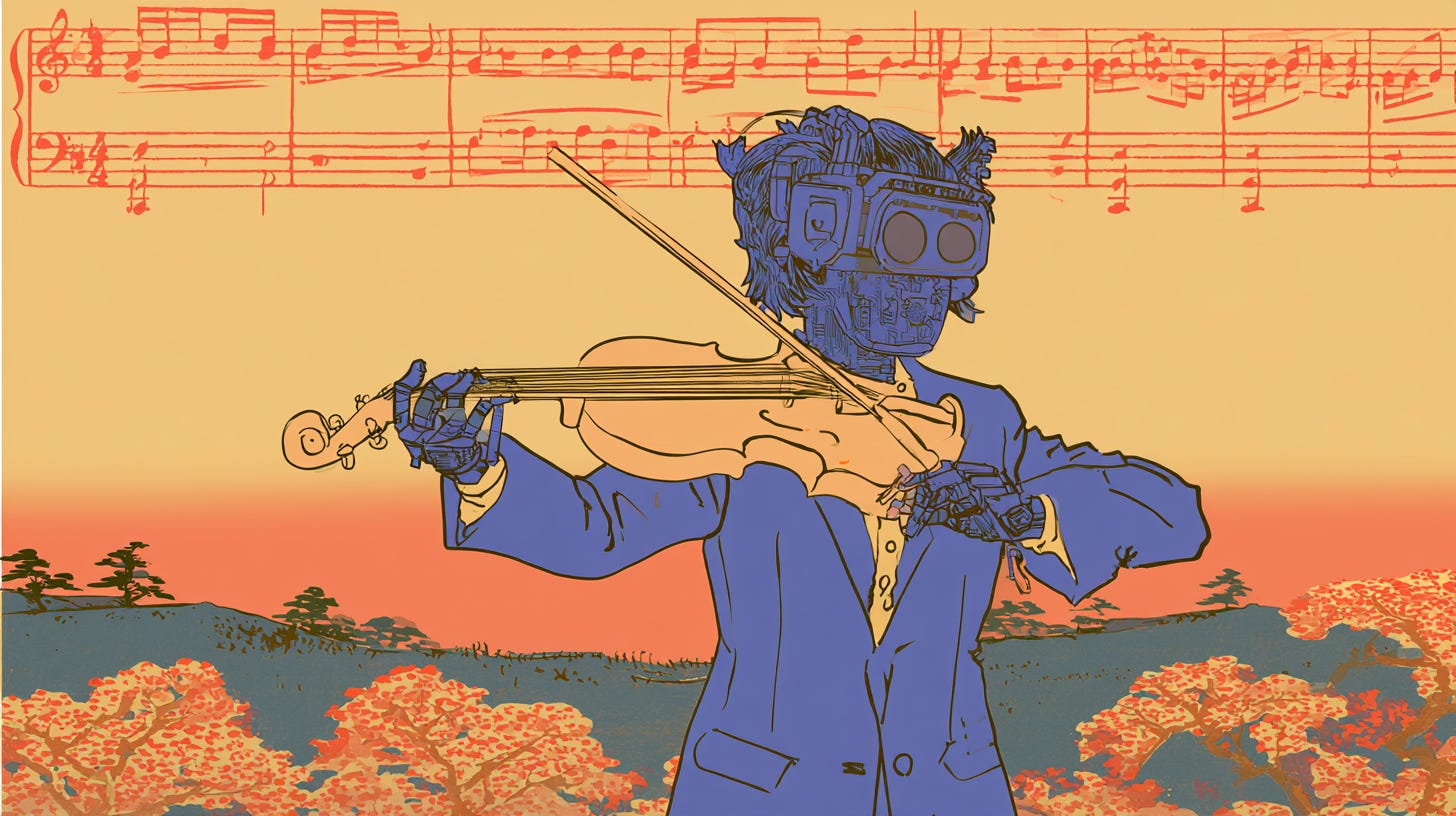
Last week I was listening to Steven Bartlett’s Diary of a CEO with Rick Rubin. Bartlett said he and his business partner found a song on Spotify and liked it. About two months later they found out the artist was AI, and he liked it less. Rubin, as I remember it, was surprised. You either like a song or you don’t.
That stayed with me. Then on 20 October Spotify published “One Year In: Putting Human Artistry First on Spotify”.
Where the story begins
A year after announcing its AI protection plan, Spotify says it took more than 50 million slop and spam tracks out of recommendations this year. On top of that, Spotify cites more than 75 million spammy tracks removed from the platform for serious or repeated violations. That is its September 2025 figure, not a new one.
No single signal catches them, Spotify says. It combines listener engagement and feedback, upload patterns, metadata and third-party AI detection tools, and it admits detection has limits. It also hunts for mass uploads, duplicates, SEO manipulation, spammy playlist networks and artificially short tracks.
The tools and initiatives:
Impersonation policy and spam filter (Sept 2025): where the plan started
AI Credits (April): artists disclose which roles and instruments used AI, shown in Song Credits on mobile
Verified by Spotify: 300,000+ artists, over 70% independent, covering 99%+ of what listeners search for
AI Persona badges: label AI-generated artist identities and keep them out of editorial and algorithmic recommendations by default
Artist Profile Protection: artists approve releases that list them before they reach their profile. Open to all by year end
1,000-stream royalty threshold (since 2024): tracks likely to be AI are 10 times more likely to fall below it
Editorial standard: editors do not program anything identified as slop or spam
Thought #1: Spotify has to do this
I get it. One upload figure Spotify has given is from 2021, when co-Head of Music Jeremy Erlich said more than 60,000 new tracks were being ingested every day. That is one every 1.4 seconds. Listen to just 30 seconds of each and one day of uploads takes about 21 days non-stop. Today the catalog is around 250 million tracks, according to co-CEO Gustav Söderström on the Q1 2026 earnings call, and I assume the daily number is much higher now. Luminate CEO Rob Jonas puts it at close to 150,000 a day across all streaming platforms. Deezer alone reports nearly 75,000 fully AI-generated tracks daily, about 44% of what it receives.
Nobody can review that by hand, so Spotify needs a mechanism that protects the audience. And the logic is simple. Spotify makes its money from subscribers, now around 300 million paying Premium users. If their Discover Weekly fills with noise, they will go somewhere else. Spotify says that since its recommendation changes it has seen a marked decrease in listener concerns about this content. For a subscription business, I think that is the number that matters.
Thought #2: Every system gets gamed
A lot of the time, music is made with one main intention: business. To make money. Not as a tool for expressing something. And wherever a system counts plays and pays for them, someone finds the trick. Sometimes the trick is even part of the artistic approach, as long as it works. Only the mechanism changes, depending on the time you live in.
In 2017 a Bulgarian individual or group, never identified in the original reporting, ran two playlists, “Soulful Music” and “Music From The Heart”, that climbed Spotify’s confidential playlist charts. “Soulful Music” had 467 tracks averaging 43 seconds, just over the 30 seconds needed for a paid play, and reached No. 35 globally with under 1,800 followers. The theory is about 1,200 premium accounts looping it. Estimates run from $415,000 a month to about a million in total. Nothing is confirmed, and reports say it may have stayed within the rules. I thought it took years to catch. It took months. The tracks were deleted in October 2017.
And charts are older than streaming. In June 1963 the Rolling Stones released their first single, “Come On”. Decca bought one ad. Their manager, Andrew Loog Oldham, reportedly had fan club members buy copies at shops that reported to the charts, and it reached No. 21. I would not say this made the Stones famous. But it is the same move.
In 1963 the trick was a record shop that reported to the charts. In 2017 it was a 30-second play that counted as a stream. Today it is mass uploads and AI tracks. I think a system is always being tricked one way or another, and I would not expect that to stop.
Thought #3: Art does not need a platform
This is the most important part for me.
Art is a way of expression. It is a way of being, a way of living. By itself it has nothing to do with platforms, with Spotify, with monetisation, and it does not even need an audience. It is made from pure heart, and mainly it is made as an expression of the creator.
I think that is what separates the real artist from the one who wants to be famous, to monetise, or to use art as leverage for something else. The second kind is everywhere, and in that sea of content every artist who wants to be seen uses some tricks. I understand that. But a trick is about the number, and art is about the person who made it. The examples above were about the number.
So when we argue about AI and human, I think we are looking at the wrong thing. The tools were never the line. Why the thing was made is.
Thought #4: The label only points one way
I am not criticising Spotify here. As I understand, they do not have another tool to do this job. They say they do not promote or penalise tracks for the tools used, and that a human artist does not become an AI Persona just because AI was part of the process.
But look at the mood around it. Every label points at AI. Where is the label for mediocre human music? Is there a mechanism? Do we need one? The closest things are the skip button and the 1,000-stream threshold, and neither cares who made the track. Spotify itself says skips and ignores helped it spot the slop. We are comparing apples with pears: AI-generated on one side, everything else on the other, and we assume the first is bad.
Frank Zappa had a version of this worry in a 1980s interview. He said the old executives, the “cigar-chomping old guys”, did not always know what they were looking at, so they recorded it, put it out and let the market decide. Some unusual, experimental music got released that way. In his view we were better off with those guys than with the supposedly hip young executives making the decisions. He also said the person in the executive chair should not be the final judge of taste for everyone. A lot of human music is absolutely mediocre. Whoever labels what is “bad” becomes that executive. How it was made does not matter. The output matters, and how the audience reacts.
I think the reason so much human music from the charts is mediocre is that it follows standards that were made up. They were built by checking behavioural data on what people perceive as good, and most of the music from the charts over the last 50 years follows them. Not all of it, but most. That is why music became normalised, and why we are not surprised by it.
Thought #5: AI raises the bar
Access to creativity is now very low. Anyone can make a song with a prompt, and how good it is depends on how well you express what you feel through that prompt. So if anyone can make an average song, average music has to compete with AI music of equal quality. To be seen, you need something new.
I think the last 50 years of music became so normalised and predictable that it is easy for AI to generate. AI makes what it was trained on. So people need to create music AI does not know.
Look at Angine de Poitrine, the masked Quebec duo with a self-built microtonal double-neck guitar. Their KEXP session went viral in February, and it looks overnight, but the band says they spent two decades cycling through styles first. The first time I listened I said, this does not make sense to me. Then I came back and listened properly, and said, guys, you really managed to surprise me.
That is how I see art in the age of AI. It needs to surprise, and I think that surprise will come from humans using AI as a tool, probably not from the AI itself. I am still waiting for the next song that makes me say “that does not make sense to me”, and then plays it again.
Sources
Spotify, “One Year In: Putting Human Artistry First on Spotify” (20 Oct 2026): https://newsroom.spotify.com/2026-10-20/prioritizing-human-artistry/
Spotify’s 50M figure and confirmation that the 75M figure is from September 2025, Music Business Worldwide: https://www.musicbusinessworldwide.com/spotify-has-pulled-more-than-50m-ai-slop-and-spam-tracks-out-of-its-recommendations-this-year/
Spotify impersonation policy and spam filter (Sept 2025), via mxdwn: https://music.mxdwn.com/2025/09/25/news/spotify-removes-over-75-million-ai-generated-tracks-implements-new-impersonation-policy-and-updates-spam-filter/
Spotify statement on not promoting or penalising AI-assisted tracks, TechRadar: https://www.techradar.com/audio/spotify/spotify-denies-its-pushing-unwanted-ai-slop-onto-subscribers-claiming-it-does-not-promote-or-penalize-tracks-created-using-ai-tools
AI Persona recommendation change, Spotify quote, blue News: https://www.bluewin.ch/en/lifestyle/spotify-significantly-limits-ai-generated-music-in-recommendations-li.3560447
Jeremy Erlich, Spotify co-Head of Music, 60,000+ tracks ingested daily (Stream On, Feb 2021), Music Business Worldwide: https://musicbusinessworldwide.com/over-60000-tracks-are-now-uploaded-to-spotify-daily-thats-nearly-one-per-second
Gustav Söderström, Spotify co-CEO, catalog of about 250 million tracks (Q1 2026 earnings call), Music In Africa: https://www.musicinafrica.net/node/389775
Luminate CEO Rob Jonas, about 150,000 tracks uploaded daily across streaming platforms (Oct 2026), iMusician: https://imusician.pro/en/resources/blog/150-000-new-tracks-uploaded-to-music-platforms-daily
Deezer on 75,000 AI tracks a day and AI tagging: https://newsroom-deezer.com/2026/06/check-ai-generated-music-in-playlists-with-deezer-detector/
Spotify at 300 million Premium subscribers (Q2 2026), Music Business Worldwide: https://www.musicbusinessworldwide.com/spotify-hits-300-million-premium-subscribers-in-q2-202/
Bulgarian playlist case, Music Business Worldwide: https://www.musicbusinessworldwide.com/great-big-spotify-scam-bulgarian-playlister-swindle-way-fortune-streaming-service/
Bulgarian playlist case, Inverse: https://www.inverse.com/article/41573-spotify-bulgarian-playlist-list-scam
Bulgarian playlist case, Hypebot: https://www.hypebot.com/how-scammers-legally-collected-1-millon-from-spotify/
Rolling Stones, “Come On” and the chart-return shops, Ultimate Classic Rock: https://ultimateclassicrock.com/rolling-stones-first-single-come-on/
Zappa quotes (cigar-chomping executives, “supposedly hip” young executives), Cartoon Brew: https://www.cartoonbrew.com/ideas-commentary/frank-zappa-explains-why-cartoons-today-suck-10513.html
Frank Zappa, “Frank Zappa explains the decline of the music business”:
(1980s interview, dated 1987 and summarised by Open Culture: https://www.openculture.com/2016/09/frank-zappa-explains-the-decline-of-the-music-business-1987.html)
Diary of a CEO, “Rick Rubin: What Jay-Z Did in 30 Minutes Left Me Speechless!”: https://podcastrex.com/shows/the-diary-of-a-ceo-with-steven-bartlett/rick-rubin-what-jay-z-did-in-30-minutes-left-me-speechless (YouTube channel: https://www.youtube.com/c/TheDiaryOfACEO/videos)
Coverage of the Bartlett Spotify story from that episode, Bradley Hook: https://bradleyhook.com/rick-rubin-diary-of-a-ceo
Angine de Poitrine, CTV News: https://www.ctvnews.ca/montreal/entertainment/article/quebecs-masked-band-angine-de-poitrine-is-blowing-up-meet-the-men-behind-the-noses/
Angine de Poitrine, Guitar Player: https://www.guitarplayer.com/guitarists/angine-de-poitrine