



TL;DR
A lot of people are worried about AI and its environmental footprint. Rightly so. But I wanted to find out what the actual picture looks like - not the marketing version, but the real one. So I spent time researching what the five biggest players in AI are actually doing about it: Google, Microsoft, OpenAI, Nvidia, and Anthropic. I built a simple scoring system to compare them fairly, and what I found is more nuanced than either the optimists or the critics tend to admit.
Some companies are genuinely leading. Some are spending billions while their emissions still go up. And two of them are basically invisible when it comes to environmental accountability. Here is what I found.
How I Scored Them
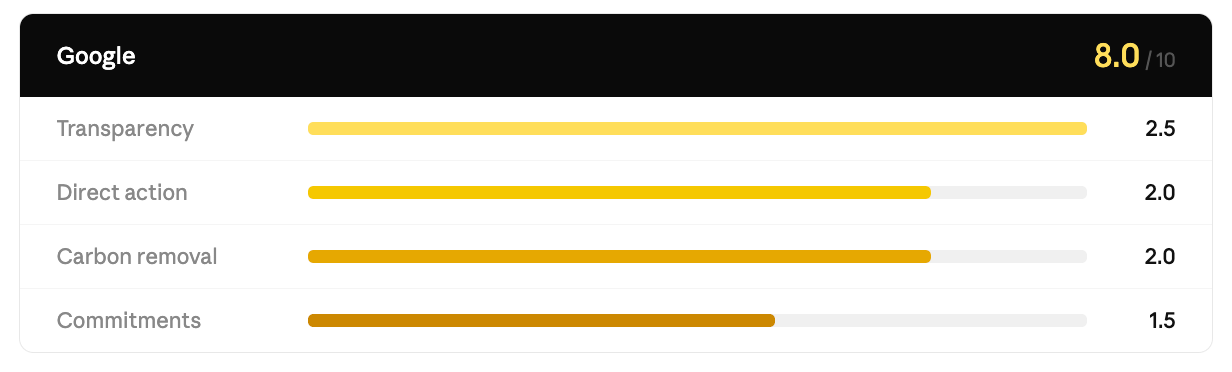
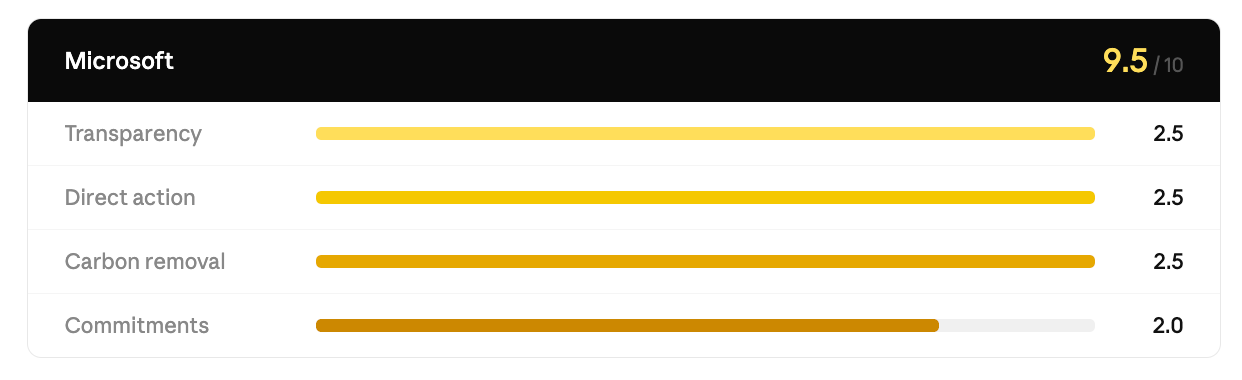
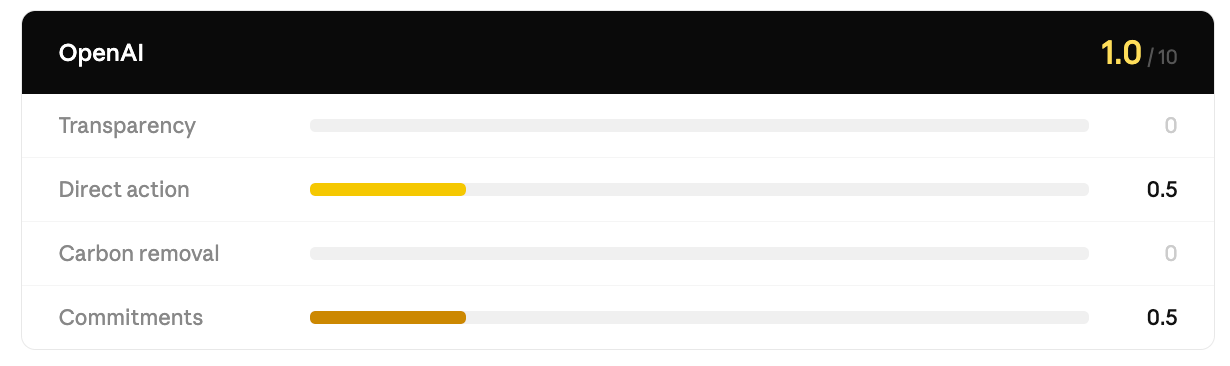
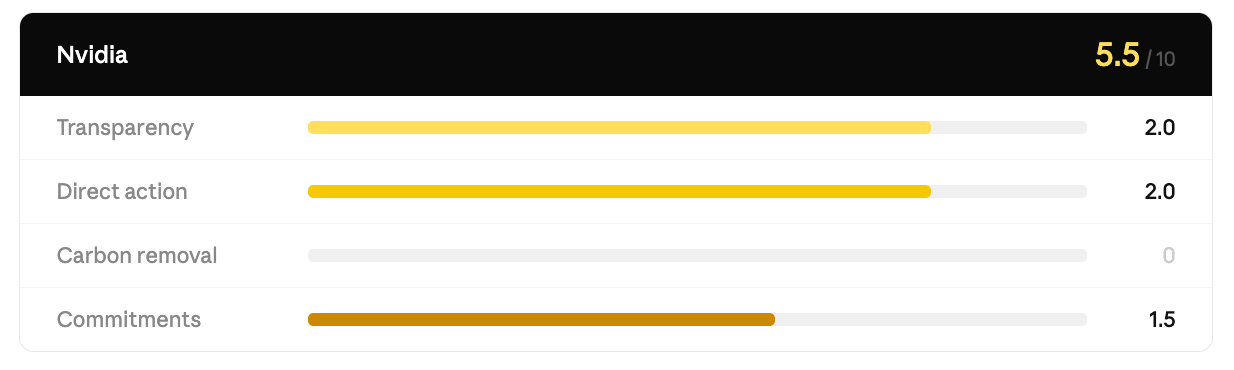
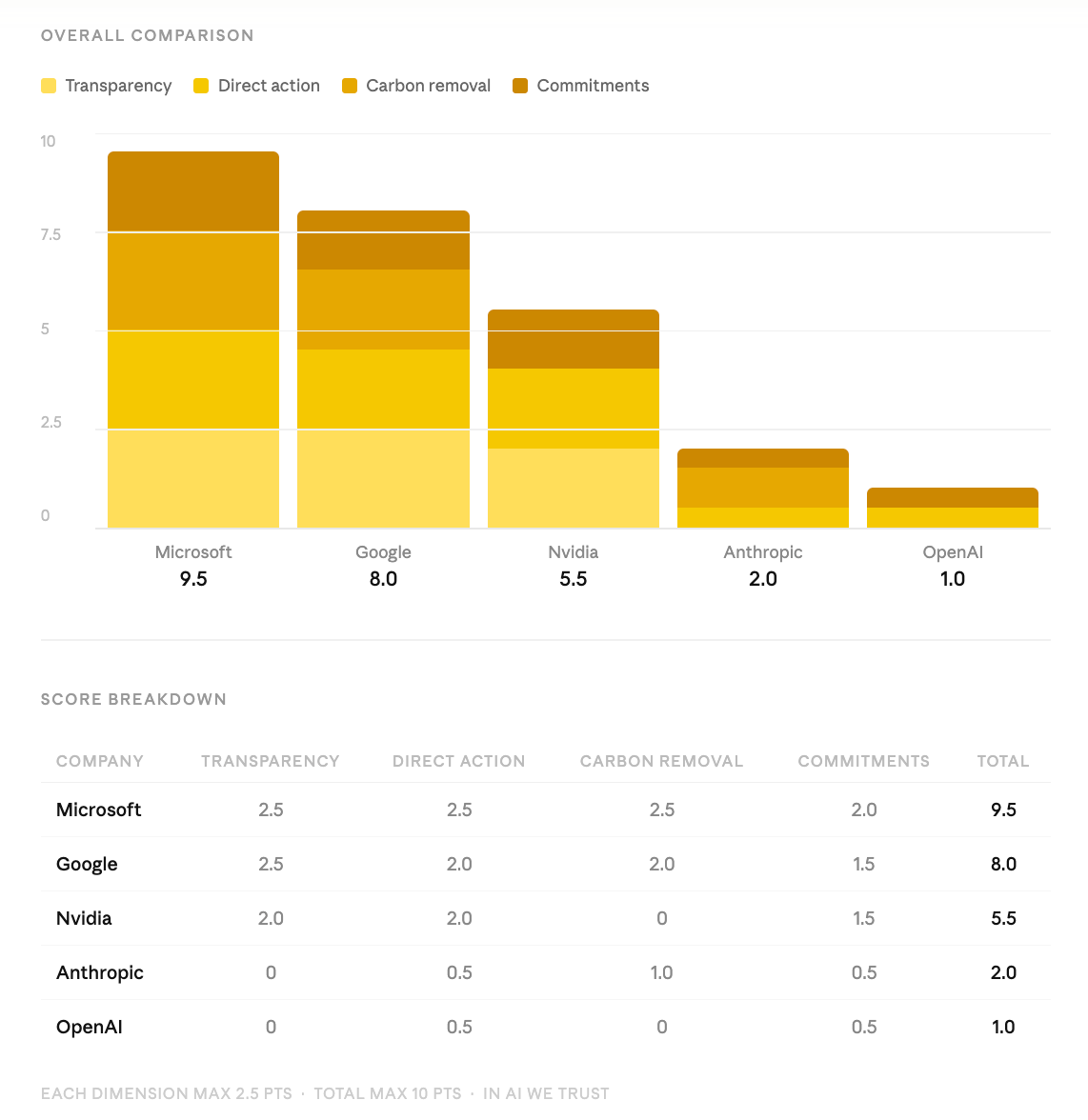
Before getting into the companies, I want to be transparent about the scoring. I rated each company across four dimensions, each worth up to 2.5 points, for a total of 10. The four dimensions are:
Transparency - Do they publicly report their emissions? Do they publish sustainability data that can actually be verified?
Direct Action - Are they buying renewable energy, investing in clean power, improving efficiency in their data centres?
Carbon Removal - Are they funding technologies that physically remove CO2 from the atmosphere?
Public Commitments - Have they made specific, dated pledges with real accountability behind them?
Within each dimension, the scoring logic works like this:
0 points: Nothing. No evidence at all.
0.5 to 1.0: Early signals. A pledge or statement, minimal follow-through.
1.5 to 2.0: Meaningful action. Real programmes, disclosed data, verifiable progress.
2.5: Industry-leading. Sets the benchmark that everyone else is measured against.
I treated pledges and actions equally in principle - a credible commitment counts. But where a company has promised something and not delivered, I flagged it. That gap matters.
One note on Nvidia specifically: they make the chips that power all AI infrastructure. They do not run AI models themselves. So I factored in their role in the industry’s energy footprint, not just their own office electricity bills. That is a fair way to judge them, I think.
Google / DeepMind
Google is probably the most active of the five when you look at the full picture. It co-founded Frontier in 2022 - the carbon removal coalition covered earlier in this issue - and has signed over 170 renewable energy agreements since 2010, totalling more than 22 gigawatts of clean power. Its data centres run at a Power Usage Effectiveness of 1.09, meaning they waste very little energy relative to what they compute. The industry average is 1.56. That gap is real and significant.
In 2024 Google also signed the world’s first corporate agreement for small modular nuclear reactors, with Kairos Power - up to 500 MW targeted by 2035. And last year it became the first major AI company to publish detailed per-query energy metrics, disclosing exactly how much electricity and water a typical Gemini prompt uses.
The honest complication is this: despite all of that, Google’s total emissions are up roughly 50% since 2019. The data centres are getting cleaner. But the company is getting so much bigger that the absolute numbers keep rising. Google has acknowledged this publicly, and has started describing its 2030 net zero target as a “moonshot” rather than a firm commitment. That is probably more honest than most. But it is also a noticeable shift in tone.
Microsoft
Microsoft is probably the most serious carbon removal buyer in the world right now - not just among AI companies, but globally. In 2025 it contracted roughly 45 million tonnes of carbon removal in a single year, across 21 companies. To put that in context, Frontier - the entire collective that Google co-founded and Anthropic just joined - has contracted about 1.8 million tonnes over its entire lifetime. Microsoft did roughly 25 times that in one year. Worth noting: in April 2026 Microsoft paused new carbon removal purchases, citing a portfolio reassessment. Existing contracts remain in place, but no new ones are being signed for now.
Its renewable energy portfolio is also enormous. It struck a deal with Brookfield in 2024 to develop over 10.5 gigawatts of new capacity - described at the time as roughly eight times the largest single corporate clean energy deal previously recorded. And in a move that raised eyebrows everywhere, it signed an agreement to restart Three Mile Island - yes, that Three Mile Island - as a 24/7 carbon-free power source for its data centres, with the plant targeted to come back online in 2027. The recommissioning is still underway, so this is a forward commitment rather than a completed one.
The uncomfortable part is that Microsoft’s total emissions are also up, around 23% since 2020. Scope 3 - the emissions from its supply chain and hardware manufacturing - make up 97% of its footprint, and those keep climbing as it builds more infrastructure. Its Chief Sustainability Officer wrote publicly that “the moon has gotten further away.” I respect that honesty. But it also tells you something about where things actually stand.
OpenAI
OpenAI is building at a scale that is hard to fully grasp. Its Stargate programme - a $500 billion commitment to AI infrastructure across the US - is probably the largest single infrastructure investment in the history of the tech industry. And there is essentially no public climate accountability attached to it.
OpenAI publishes no sustainability report. It has disclosed no emissions figures. It has made no dated net zero commitment. It is not a member of Frontier. The only environmental figure Sam Altman has shared publicly is an estimate of energy per ChatGPT query - and that was not part of any audited disclosure.
The deeper problem is that several Stargate data centre sites are being powered partly by on-site natural gas generation. Off-grid gas turbines, running because the local grid cannot supply what they need fast enough. OpenAI says it plans to transition to cleaner energy over time and has described nuclear and geothermal as priorities. That may be genuine intent. But right now, the world’s most prominent AI company is building its compute infrastructure on fossil fuels, with no public emissions data, and no formal commitment to change.
I am not saying this to be harsh about OpenAI specifically. I am saying it because if you care about this topic, it is the most important gap in the picture.
Nvidia
Nvidia’s situation is different from the others, and I think it is important to frame it correctly. Nvidia does not run AI models. It makes the chips that everyone else uses to run them. So when we talk about AI’s energy footprint, Nvidia is not a consumer of that energy - it is the supplier of the hardware that consumes it.
That framing actually makes its position more significant, not less. Because the efficiency of Nvidia’s chips determines, at a fundamental level, how much energy the entire AI industry uses.
On that front, the story is genuinely impressive. The latest generation of Nvidia GPUs is claimed to be 25 times more energy efficient for AI inference than the previous generation. Over the past decade, the company says inference efficiency has improved by a factor of roughly 100,000. These are vendor benchmarks and should be read with appropriate scepticism - but the directional story is consistent with what independent researchers observe.
On its own direct footprint: Nvidia now runs its offices and facilities on 100% renewable electricity. It has set science-based emissions targets validated by SBTi. It publishes an annual sustainability report with third-party assurance on selected metrics.
The honest limitation is that around 98% of Nvidia’s total emissions come from its supply chain - primarily chip manufacturing in East Asian grids that are still heavily fossil-fuelled. Nvidia has an intensity target for that (emissions per unit of compute), but no absolute reduction target. So the supply chain footprint is largely unconstrained.
Anthropic
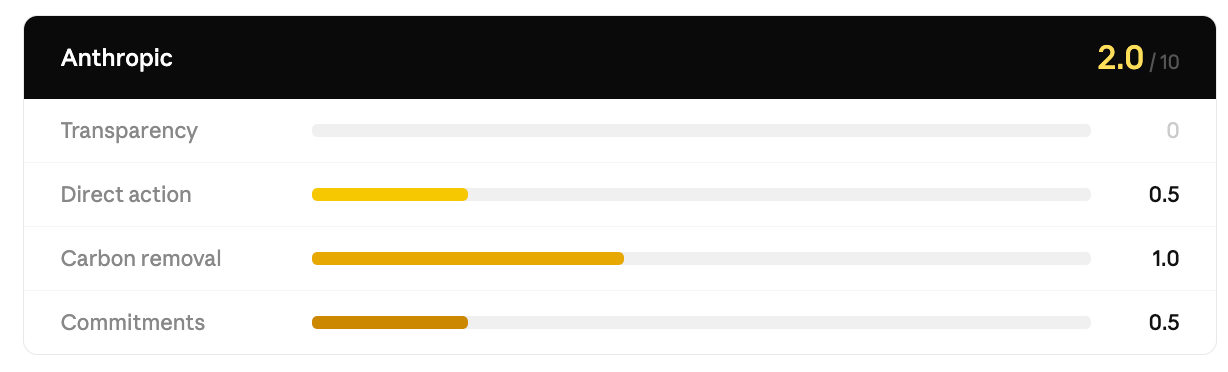
Anthropic is where the story gets interesting for me personally, because this is the company that triggered this research in the first place.
On June 17, 2026, Anthropic became the first pure AI lab to join Frontier, the carbon removal coalition. That is genuinely significant. This is Anthropic’s first concrete climate commitment. Before this, it had published no sustainability report, no emissions data, no formal targets. Nothing. For a company that brands itself as the most safety-conscious and responsible AI developer, that gap was real.
The Frontier membership does not erase it. Anthropic still has no emissions disclosures. It has not made a net zero pledge. Earlier this year it advocated for expanded natural gas generation in the US to power AI compute. And in 2026 it made several senior energy hires - which is probably the most honest signal of where a company’s priorities are heading.
I will be watching what comes next. The S-1 it filed confidentially in early June 2026 will likely force more disclosure. That is probably good for everyone.
Overall Comparison
Final Thoughts
When I started this research, I probably expected to find either a reassuring story or an alarming one. What I found was more honest than either.
The companies with the longest history - Google and Microsoft - are doing the most, spending the most, and being the most transparent. They are also the ones whose emissions are still rising, and who are honest enough to say so publicly. I find that more credible than silence.
The companies with the shortest history - OpenAI and Anthropic - are doing the least. Some of that is probably about age and maturity. Some of it is about priorities. The Pandora’s box is already open on AI energy consumption. The IEA projects that data centre electricity demand will roughly double by 2030, with AI as the primary driver. That is not a future problem. It is happening now.
What gives me some optimism is that the direction of travel is broadly positive. Anthropic joining Frontier is a first step. OpenAI’s infrastructure ambitions, whatever their current energy source, will face increasing pressure from regulators, enterprise customers, and its own employees. Nvidia’s chip efficiency gains are real and matter enormously at scale.
History repeats itself. Every major industrial shift - electricity, railways, cars - created environmental problems before it created environmental solutions. AI is probably no different. The question is how long the gap lasts, and who decides to close it.
Progress is happening. Direction matters. And now you have a clearer picture of where each player actually stands.